
Is Las Vegas a Good Place to Live in 2026?
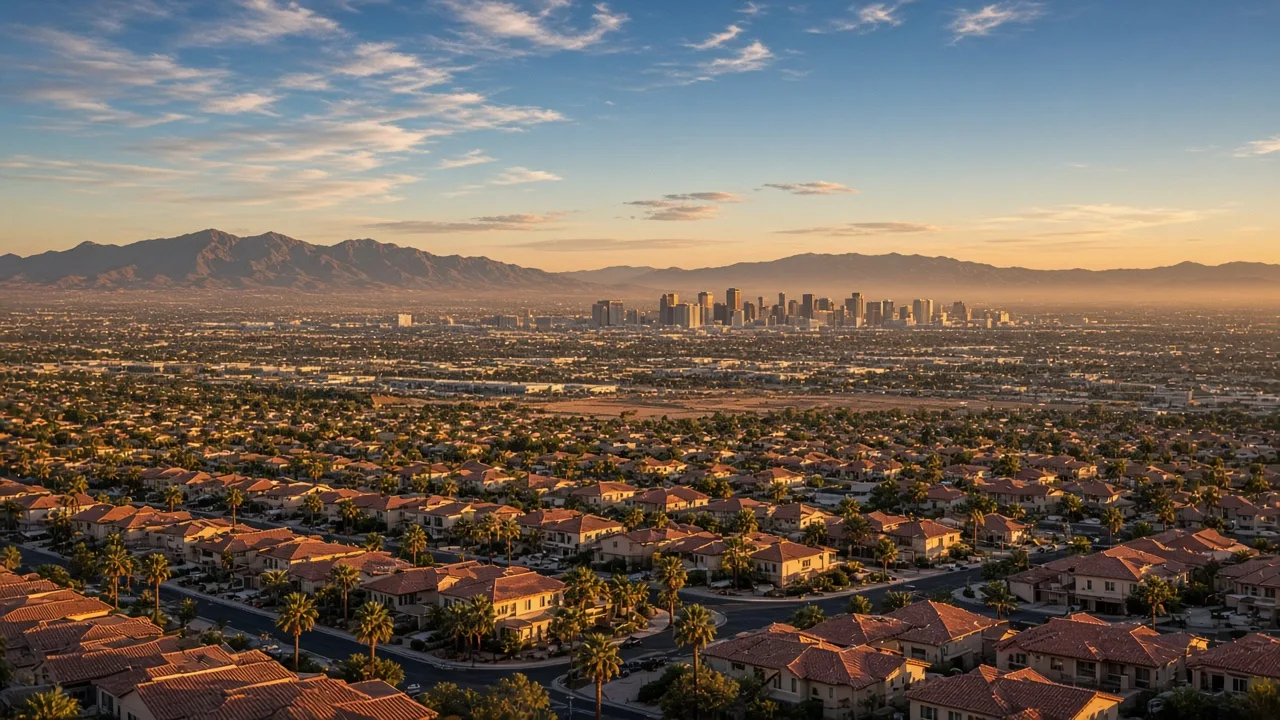
The honest answer is that yes, for many people, Las Vegas is a genuinely good place to live in 2026, and no, it is not the right fit for everyone. The valley keeps growing, roughly 2.4 million people and counting, because a lot of people decide the trade-offs work for them: no state income tax, more than 300 days of sunshine a year and a housing market that still costs less than coastal California. But the heat is real, the economy still leans on tourism, and you need a car for almost everything. Here is the evidence and the honest trade-offs, so you can decide for yourself.
Quick Takeaways
- The Las Vegas metro is home to about 2.4 million people and grew by roughly 44,600 residents in the latest Census year, up 5.4 percent since 2020.
- Nevada has no state income tax, and cost-of-living indexes put Las Vegas around 10 percent above the national average, with housing the main driver.
- The median existing single-family home in Southern Nevada sold for $470,000 in September 2026, $20,000 below the record high set earlier in the year.
- The valley averages more than 300 days of sunshine a year, with July highs around 104 degrees and January highs around 58.
- Las Vegas was the top U.S. destination for retiree-age movers in 2025, and Sun City Summerlin alone spans about 2,400 acres with more than 14,000 residents.
The Short Answer: It Depends on What You Need
I get asked some version of this question every week, usually by someone who has never set foot in the valley or by someone who visited once and fell for the Strip. Here is the honest version: Las Vegas is a real city of roughly 2.4 million people, per U.S. Census Bureau estimates, and it keeps growing because people keep deciding it works for them. It is not a mirage, and it is not a utopia either. It is a desert metro with real advantages, real trade-offs and a character that does not suit everyone.
The way I answer the question is to turn it back around. What does your week look like? Where would you work, what do you like to do on weekends, and what can you really afford? The sections below lay out the evidence on the things people actually ask about: the money, the housing market, the weather, the jobs, the outdoors and the communities. Read them honestly, and you will know whether Las Vegas is your kind of place or a place you should admire from a distance.
Why People Keep Moving Here
The simplest evidence that Las Vegas is a good place to live is that people keep arriving. The metro added about 44,600 residents in the year ending July 2024, up roughly 1.9 percent, and it has grown about 5.4 percent, nearly 123,000 people, since the 2020 Census, per the U.S. Census Bureau. That kind of sustained growth does not happen by accident.
Moving surveys say job, family and retirement together drive about 60 percent of moves. United Van Lines' 2025 National Movers Study ranked Nevada tenth among inbound states with 57 percent of moves arriving, and a separate 2025 report ranked Las Vegas as the top U.S. city destination for retiree-age movers, with roughly 7,800 retirement-age arrivals that year. California is the single biggest origin state, and relocation data put Nevada home prices about 42 percent below California's, which is the story I hear from clients every month. If you are weighing that same move, I wrote a full guide on moving from California to Las Vegas, and the relocation guides hub covers the rest of the country.
The Money: No State Income Tax, and a Cost of Living to Check
The tax story is the part people hear first, and it is real. Nevada has no state income tax, which matters for every paycheck and every dollar of retirement income. Property taxes run relatively low too, with effective rates around 0.55 percent in recent estimates, and Nevada's property tax system has caps on how fast assessed values can rise.
The honest counterweight is the cost of living. BestPlaces' 2025 index put Las Vegas at 110.6, about 10 percent above the national average, and most 2025 and 2026 indexes cluster between roughly 98 and 113. Housing is the main driver, with the housing index near 114.5. Groceries run close to the national average, around 102, and healthcare runs below it, around 93. Transportation tends to run above average, because this is a car city. The bottom line: Las Vegas is cheaper than coastal California for most households, especially once income tax is in the math, but it is not a bargain-basement market, and the monthly numbers deserve a real look, not a guess.
The Housing Market: What a Home Costs Right Now
Las Vegas REALTORS reported the median existing single-family home in Southern Nevada sold for $470,000 in September 2026, unchanged from a year earlier and down $20,000 from the record high of $490,000 set in May and June. August came in at $475,000 and July at $480,000, so the market has been easing off its peak through the second half of the year. Condos and townhomes run lower, and the new-construction market has its own pricing.
What that means for you depends on which side you are on. Buyers have been getting more negotiating room as supply has climbed, and sellers are pricing more carefully than they were a year ago. The full picture, including inventory and what the numbers mean, is in my complete 2026 buyer's guide, and I keep the market report updated with the latest data.
The Weather: More Than 300 Days of Sunshine and a Real Summer
If you love sunshine, this is your place. Las Vegas averages more than 300 days of sunshine a year, with some tourism sources counting more than 320, and roughly 3,800 hours of sun annually. Winters are genuinely mild: January highs average around 58 degrees with overnight lows near 39. That is the version of Las Vegas people imagine, and it is accurate for about eight months of the year.
Then there is summer. July highs average around 104 degrees with overnight lows near 81, and daytime highs run 100 to 106 through June, July and August. Air conditioning is not an amenity here, it is the utility bill that keeps life possible, and summer power bills are a real line item. The heat is survivable and most residents manage it with early-morning routines, covered parking and good insulation, but you should know exactly what you are signing up for before you move to a place where the pavement glows in July.
The Jobs: Diversifying, Still Tourism-Heavy
The honest job picture is mixed. Clark County's unemployment rate ran about 5.2 percent in June 2026, down from 5.7 percent a year earlier but still above the national rate of about 4.2 percent, and leisure and hospitality remains the largest employment sector, roughly a quarter to a third of the workforce. Tourism still moves the whole metro, and when visitation dips, the economy feels it.
The longer-term story is more encouraging. The region has been building out logistics and warehousing, clean energy and advanced manufacturing, and a life-sciences coalition launched in 2025, with a strategic plan aimed squarely at diversifying beyond tourism. Southern Nevada job growth ran about 2.1 percent year over year in spring 2026. So the advice I give relocating workers is the same advice I give everyone: bring a job, a transfer or a clear employment plan, and verify the commute before you commit to a neighborhood.
The Outdoors: Red Rock, Lake Mead and Mount Charleston
One of the most underrated parts of living here is what sits on the valley's edges. Red Rock Canyon National Conservation Area is about 16 to 20 miles west of the Strip, a 20 to 30 minute drive from Summerlin, with sandstone cliffs, hiking and a scenic loop. Lake Mead is roughly 25 to 30 miles east, near Hoover Dam, for boating and water sports. Mount Charleston is about 35 to 40 miles northwest, under an hour from most of the valley, and in a good winter it gets real snow, which makes for a believable escape from the summer heat and a change of scene year round.
The honest trade-off: you drive to all of it. There is no mountain transit system and no ferry to the lake. But for a city famous for its casinos, the weekend options are genuinely good, and the west side of the valley, Summerlin especially, was built with trails and open space woven through it.

The Communities: From Summerlin to Henderson to Sun City
Where you live in the valley changes what living here feels like more than almost anything else. Summerlin, the west-side master plan, spans roughly 22,500 acres with more than 300 parks and over 150 miles of trails near Red Rock, per its developer, and it is the community I know best village by village. Henderson has grown to about 350,000 residents, up roughly 10 percent since 2020, with established communities like Green Valley and Anthem that families have chosen for decades.
And the 55+ scene is a big part of the valley's identity. Sun City Summerlin, the Del Webb community on the west side, spans about 2,400 acres with more than 14,000 residents across roughly 7,700 to 8,000 homes, and active-adult communities run through Henderson and the rest of the valley. I live in a 55+ community myself, so I understand that choosing one is a lifestyle decision, not just a housing decision. Start with my Summerlin guide, the Henderson guide, the Sun City Summerlin guide and the 55+ communities hub.
Who Las Vegas Is Not Right For
My job is to tell you the truth even when it is not what you hoped to hear, and that applies to the city itself. There are people for whom Las Vegas is a genuinely bad fit, and it is kinder to say so up front:
- 1 People who cannot take the heat. Three months of 100-plus degree days is not a rumor, and if you wilt at 90, the July through September stretch will wear on you no matter how good the air conditioning is.
- 2 People who want to live without a car. The valley is spread out and transit is limited, so if walkability and public transit are your top priorities, this is not the city for you.
- 3 People who need four real seasons. If you want snowy winters, fall color and a genuine spring, the desert gives you mild winters and a long, hot summer instead. Mount Charleston helps, but it is a day trip, not your backyard.
- 4 People who hate tourism-driven cycles. The economy leans on visitors, and when conventions and tourism soften, the whole metro feels it. Jobs are diversifying, but the cycle has not disappeared.
- 5 People on a very tight budget. Las Vegas is cheaper than coastal California, but the cost-of-living index still runs about 10 percent above the national average, and housing is the expensive part. The numbers deserve a real spreadsheet, not a vibe.
None of that makes Las Vegas a bad place to live. It makes it a specific place, and the trick is knowing which kind of person you are before you pack the truck.
How Sandy Helps You Decide
I help people relocate to and within the Las Vegas Valley every week, and most of the time the first conversation is not about houses at all. We start with your life: the job, the commute, the schools questions, the budget, the lifestyle you want and the things you refuse to give up. Then we match that list to the communities that actually fit, from Summerlin to Henderson to the 55+ communities, on evidence rather than hype.
As a former licensed residential appraiser, I also read value carefully and explain what the numbers mean as education, never as a promise. Fair housing and equal opportunity apply to every buyer, full stop, and my job is to educate first and help you decide with confidence.
Frequently Asked Questions About Living in Las Vegas
Q: Is Las Vegas a good place to live in 2026?
A: For a lot of people, yes. The metro has grown to roughly 2.4 million residents, and people keep arriving for real reasons: no state income tax, more than 300 days of sunshine a year and housing that still costs less than coastal California. It is also not right for everyone: the summer heat is real, the economy still leans on tourism, and you need a car for almost everything. The honest answer depends on your job, your budget and how you want to live.
Q: Why are people moving to Las Vegas?
A: Job, family and retirement together account for about 60 percent of moves, per relocation surveys. United Van Lines' 2025 study ranked Nevada tenth among destination states with 57 percent of moves inbound, and one 2025 report ranked Las Vegas as the top U.S. city destination for retiree-age movers, with roughly 7,800 arrivals. California is the largest origin state, and Nevada home prices average about 42 percent below California's.
Q: Is it expensive to live in Las Vegas?
A: Cost-of-living indexes put Las Vegas around 10 percent above the national average, with housing the main driver. Groceries run close to the national average and healthcare costs tend to run below it. The offsets are real: Nevada has no state income tax and a relatively low effective property tax rate, which matters more the longer you own.
Q: What is the weather really like in Las Vegas?
A: The valley averages more than 300 days of sunshine a year. July highs run around 104 degrees with overnight lows near 81, and January highs run around 58 with lows near 39. The winters are genuinely mild and the summers are genuinely hot, so air conditioning is a way of life, not an amenity.
Q: How much do I need to buy a home in Las Vegas right now?
A: Las Vegas REALTORS reported the median existing single-family home sold for $470,000 in September 2026, unchanged from a year earlier and $20,000 below the record high set in May and June. What you need to buy depends on your down payment, the loan program and your full monthly math, and I break that down in my article on how much income you need to buy in Las Vegas.
Q: Is Las Vegas a good place to retire?
A: It is one of the most popular retirement destinations in the country, and not by accident: no state income tax, mild winters, a big 55+ community scene and a major airport for visiting family. Sun City Summerlin alone spans about 2,400 acres with more than 14,000 residents, and active-adult communities are spread across Henderson and the rest of the valley.
Trying to Decide Whether Las Vegas Is Right for You?
If you are weighing a move to Las Vegas, text me. I will help you think through the communities, the costs and the timing based on your actual situation, not a generic checklist. No pressure and no obligation, just a clear next step whenever you are ready to take it.
REALTOR® · Certified AI Agent · 36+ years in real estate · Former Appraiser · Nevada license S.0072707
Related Resources
- More Las Vegas Lifestyle & Relocation articles
- Best Places to Live in Las Vegas: A 2026 Neighborhood Guide
- Summerlin vs Henderson: Which Las Vegas Neighborhood Is Better?
- Moving From California to Las Vegas: What You Need to Know
- How Much Income Do I Need to Buy a Home in Las Vegas?
- Las Vegas 55+ Communities

Written by
Sandy Margolin
REALTOR · Certified AI Agent · 36+ years in real estate · formerly a licensed residential real estate appraiser · Nevada license S.0072707.
More about SandyStill weighing the move?
That is exactly the conversation worth having. We can compare communities, costs and timing before you ever book a flight.