
Pickleball: A Beginner's Guide for Active Adults
Inspired by 55places.com
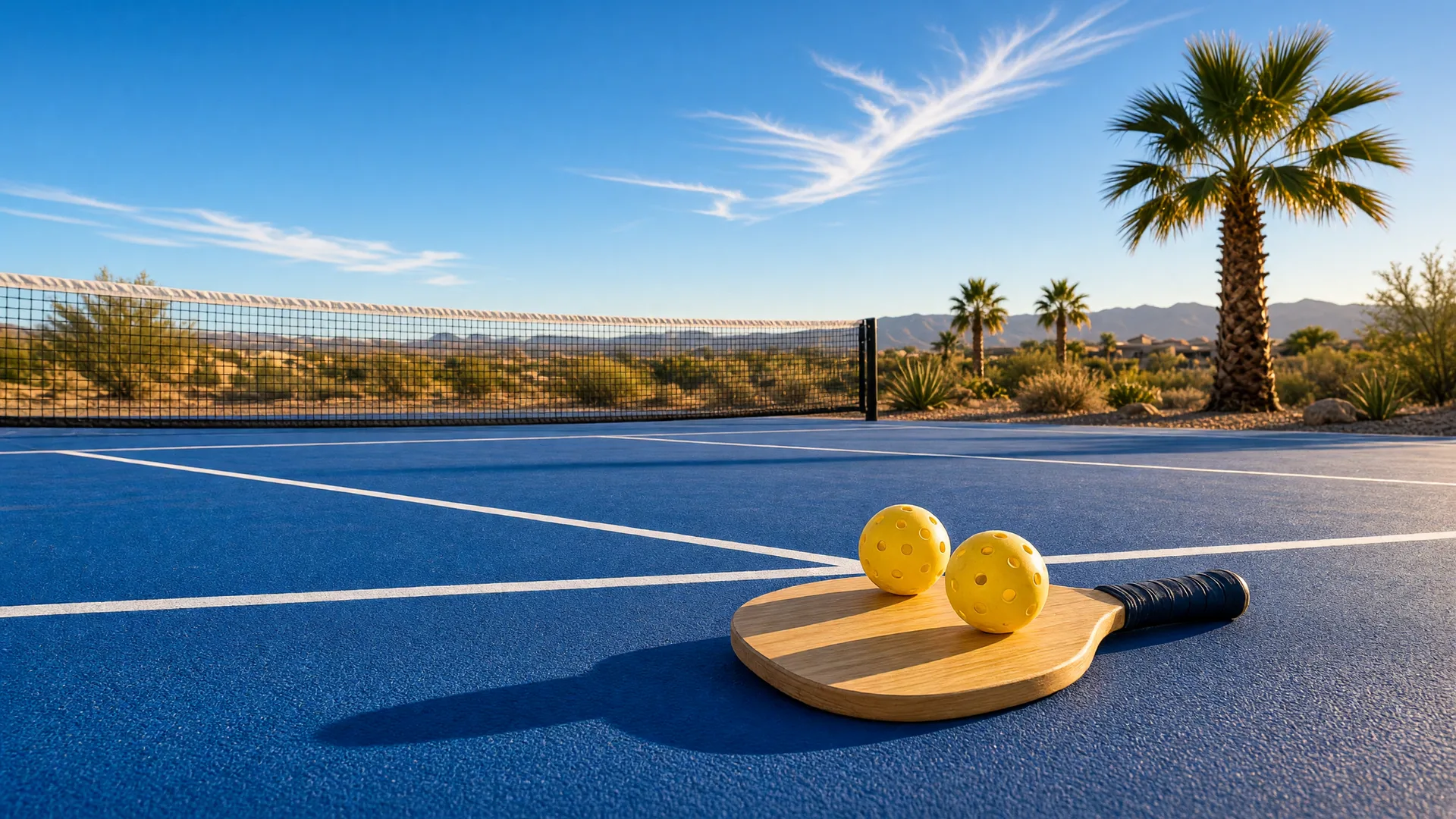
What Is Pickleball?
Have you been searching for a fun, new sport to try? Pickleball is gaining popularity as a growing staple in recreation communities. You may have noticed pickleball courts popping up in rec centers and resort-style 55+ communities. Active residents often flock to the court for some midday exercise. There is nothing dinky about this game (except, of course, a dink shot soaring over the net). Pickleball requires strategy, precision and skill.
So what exactly is pickleball? Well, for one thing, there are no actual pickles involved. Think of it as table tennis meets traditional tennis meets badminton. You have a net, a court, paddles and a lightweight ball similar to a whiffle ball. Players can face off in singles or doubles, just like traditional tennis.
Anyone from school-aged children to retirees can enjoy the game of pickleball. Because the court is smaller than a tennis court, play is more compact and slightly less strenuous. Yet, because of its non-threatening nature, pickleball is a great way to get outside and have fun. You will not even notice that you are exercising as you play.
I have watched pickleball take over the Las Vegas Valley the way it has taken over retirement communities everywhere: one court at a time. It may not be an Olympic sport yet, but it is certainly a growing sport in many active 55+ communities. There is very little equipment needed, and many fitness centers provide paddles and nets. The rules are similar to ping pong, so there is not much of a learning curve when getting into the sport. Once you are in, you will be hooked on the fun.
Why Pickleball in a 55+ Community?
Social
Pickleball can be played in singles or doubles. The game requires collaboration, strategy and teamwork, as well as plenty of good vibes. Players join the court to connect with other pickleballers, trade some friendly banter, strike up a rivalry and even form their own teams. Many even come up with team names and tees. Neighborhood pickleball leagues are an opportunity for residents to come together. Pickleball is always open to players of all skill sets, making this game the perfect opportunity for a community mixer.
Accessible
Pickleball was designed to be a sport for everybody, and that is exactly what it is. One distinction that sets it apart from tennis and similar sports is the non-volley zone, also called the kitchen. This keeps the game contained within a smaller space, focusing more on skill than power or fitness. Running is minimized and the playing field is made more equitable for everyone involved. The ball itself is soft and light, minimizing the risk of injury, and the game is not simply a test of strength: all players have an equal chance at winning. It is an excellent sport for those with joint issues, and the game can easily be modified to accommodate additional needs so all participants have the chance to hit a dink.
Indoor or Outdoor
Whatever the weather, a game of pickleball is always a good idea. Get outside and enjoy the scenery while practicing your swing. Pickleball is gaining popularity in active retirement 55+ communities that prioritize plenty of greenspace and ways to connect with nature. Poor weather days call for a round of indoor pickleball. Onsite rec centers are the perfect spot to relax, chat and stay active with a few lively games.
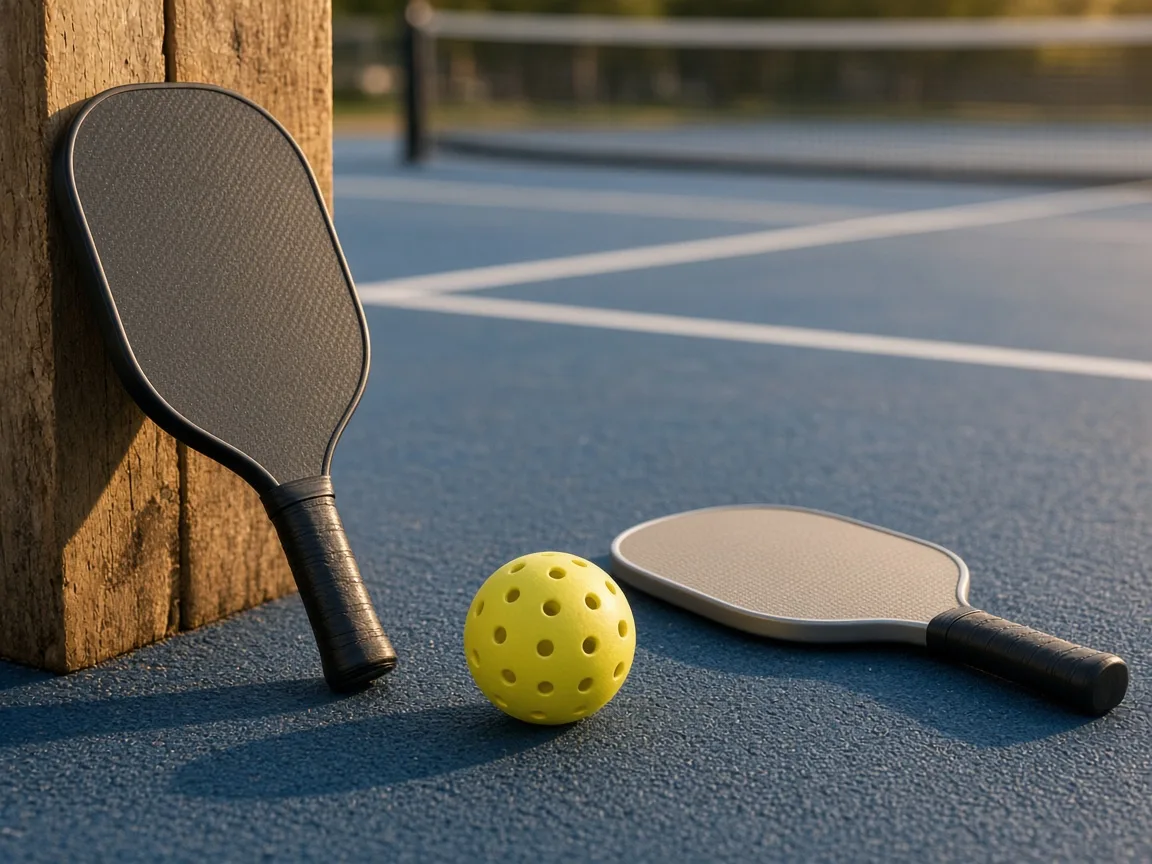
Rules of Pickleball
Although pickleball is played on a court, the rules of the game more closely resemble table tennis or badminton than traditional tennis. Here is how a game works:
- The game begins with one side serving. The player uses a paddle (wood or composite, larger than a ping pong paddle) to hit the pickleball, a light, plastic, hole-covered whiffle ball.
- To serve properly, keep one foot behind the backline and strike the ball with an underhand swing, aiming at the service court diagonally over the net and clearing the no-volley zone.
- Service starts from the right-hand court. Only one fault is allowed.
- In doubles, both players get to serve once, and then the serve passes to the opposing team.
- Both sides must let the ball bounce once before hitting it with the paddle at the start of the game. After that, players may volley the ball (hit it without letting it bounce), provided they are not within the no-volley zone, the seven-foot area marked on the court beside the net.
- A player or team scores points only while serving. A game is played to 11 points, and a win must be by two points.
Similar to tennis, the following moves are faults in the game of pickleball, and each fault causes a loss of a point:
- Failing to clear the net.
- Hitting the ball out of bounds.
- Volleying the ball from within the no-volley zone, or while a foot is in it.
- Volleying the ball before it has bounced on a first serve or first return.
Pickleball Equipment and Court
All you need to play pickleball is a couple of paddles, a whiffle ball and a net. You can draw your own court with sidewalk chalk (that is how the early players did it). Fortunately, you can find official pickleball courts at many playgrounds, community centers and private clubs, as the game is growing in popularity.
A pickleball court is approximately one-third the size of a regular tennis court and is laid out according to the dimensions of a badminton court: 20 feet by 44 feet. A net divides the court, hung at 36 inches in height on each end. On either side of the net, there is a seven-foot area, marked with a line on the court, called the no-volley zone. The playing area of the court (20 feet by 15 feet) is divided into two equal rectangles, side by side (10 feet by 15 feet).
The main reason for the no-volley zone is to take away opportunities for smash volleys or drop shots, making the game more reliant on the careful placement of shots. Of course, the rule also creates opportunities for the other side to fault, which adds to the fun of the game.
Why Is It Called Pickleball?
There are two predominant theories as to how this sport got its name. The game was created by Washington politician Joel Pritchard to entertain his bored family during the summer of 1965. According to Joel, his wife Joan described the sport as looking like the pickle boat in rowing. This refers to a crew of oarsmen who are leftovers from the other boats.
The second theory is that it is named after the Pritchards' dog, which was named Pickles. The dog would chase the ball and run off with it. According to Joan Pritchard, Pickles did not come around until two years after the game was invented, so the dog was named after the game. However, it is possible the game simply did not have a formal name until the dog came around to inspire it.
No one is quite sure which story is true, and we may never learn the true origins of the name. Either way, creativity defines this lovable hobby, and the name mystery is part of its charm.
Where Can You Play Pickleball?
With the growing popularity of pickleball, you can easily find a place to play in every state across the U.S. In fact, the USA Pickleball Association (USAPA) has a list of all addresses and names of places at which you can play pickleball, organized by state. The sport is also gaining in popularity in the UK, Canada, Japan, Korea, Australia, New Zealand, Indonesia, Thailand, China, Hong Kong, Singapore and Malaysia.
There is a growing list of pickleball leagues organized through local recreation districts, YMCAs and private clubs. First check the USAPA list, and then search local directories for your hometown to see if there is a pickleball league in your area. If not, perhaps you can get one started.
In the Las Vegas Valley, more and more 55+ communities now have courts and leagues of their own, and residents often play every day of the week. For the specific spots around town, I wrote a separate guide: Where to Play Pickleball in Las Vegas .
If you cannot find an official pickleball court, use a badminton court and simply lower the net to a height of three feet. Or create your own court in your driveway or another blacktop surface. Because you do not need much area (compared to a tennis court), it is easy to find a suitable area on which to draw the service courts and no-volley zone and then hang a net in the middle.
Once you have introduced pickleball to your friends and colleagues, chances are they will love the game too. As more people learn about this sport, the number of courts, leagues and tournaments increases each year. The family-friendly game is enjoyed by people of all ages. If you do not already play pickleball, why not start now?
Pickleball Strategies
If you are new to playing pickleball, you may be interested in some strategies for your game. Here are some tips to keep in mind on the court:
- If you notice an opponent has a weak forehand or backhand, try to serve to their weak side. It is ideal to serve deep in the court, but be careful not to hit it out.
- Be in a ready position after every volley you hit back.
- When playing doubles, hit the ball down the middle of the court. That forces your opponents to quickly decide who will go for it, which leads to potential errors on their side.
- Surprise your opponent with a different kind of shot. Use one type consistently before surprising them with another that throws them off.
- Try to avoid hitting the ball straight to your opponent. Use shots that force them to move.
Fitness and Wellness
Do you want to improve your balance but are not quite ready to embrace the yoga lifestyle? Give pickleball a try. This lively game may not feel like exercise, but the sport promotes agility, speed, strength and overall cardio health. Unlike higher-impact sports such as tennis, pickleball is far kinder to your knees and core. You will still get the benefit of an excellent workout without the next day's soreness.
Pickleball incorporates strategy as well as fitness, engaging your brain as much as your body. If getting better attuned with mindfulness is a priority of yours, consider taking a whack at pickleball.
Adding pickleball to a gym routine is also a great recovery-day option. The game is low-impact but still engages your muscle memory and stamina. It is a fantastic aerobic workout that promotes better circulation with a reduced risk of injury or strain. After all, a workout that feels like a game is the best type of exercise: we are far more likely to be consistent in an activity when we enjoy ourselves.
Fun for the Whole Family
Pickleball is a sport for all ages. In recent years, the game has become especially popular among adults 55+. The ease of participation and the simplicity of the rules allow anyone to jump in and pick up the paddle. You will often find like-minded, tight-knit communities in pickleball groups. If you are new to the area, this is a chance to meet your neighbors, and maybe beat them on the court.
Unlike other sports that may not appeal to your wider social circle, such as golf or tennis, pickleball is an easy game to invite others to participate in. All skill levels, from beginner to pro, can join in on the excitement. The paddles are designed so that reach and arm length play a diminished role, which allows for more contenders at the community tournament.
Whether you are playing against adults or enjoying a weekend with the grandkids, the simplicity of the game makes it a hit with all involved. Divide your family into teams, have a match with a friend, or test your skills at a neighborhood tournament. Pickleball is a great way to kick off the season. Give it a try at your next barbecue.
Inspired by 55places.com. By Sandy Margolin, REALTOR. The rules, equipment, court dimensions and fault explanations above follow the original guide; I added the Las Vegas notes so the ideas land closer to home.
Find a court, then find a community
If pickleball is part of the life you want next, it belongs on your 55+ community checklist. When I help clients compare communities, I ask about the courts, the leagues and the morning game, because that is where friendships actually start.
- Explore Las Vegas 55+ communities
- Where to Play Pickleball in Las Vegas
- 50+ Hobbies for Active Adults & Seniors
Tell me which communities you are considering and I will set up the visits, show you the courts and introduce you to the lifestyle. Start the conversation.

Written by
Sandy Margolin
REALTOR · Certified AI Agent · 36+ years in Las Vegas real estate · more than 15 years prior experience as a licensed residential real estate appraiser · Nevada license S.0072707.
More about SandyPickleball is the lifestyle. The community is the decision.
If the court matters to you, it should matter to your community checklist. Let us compare the options with your hobbies in mind.